
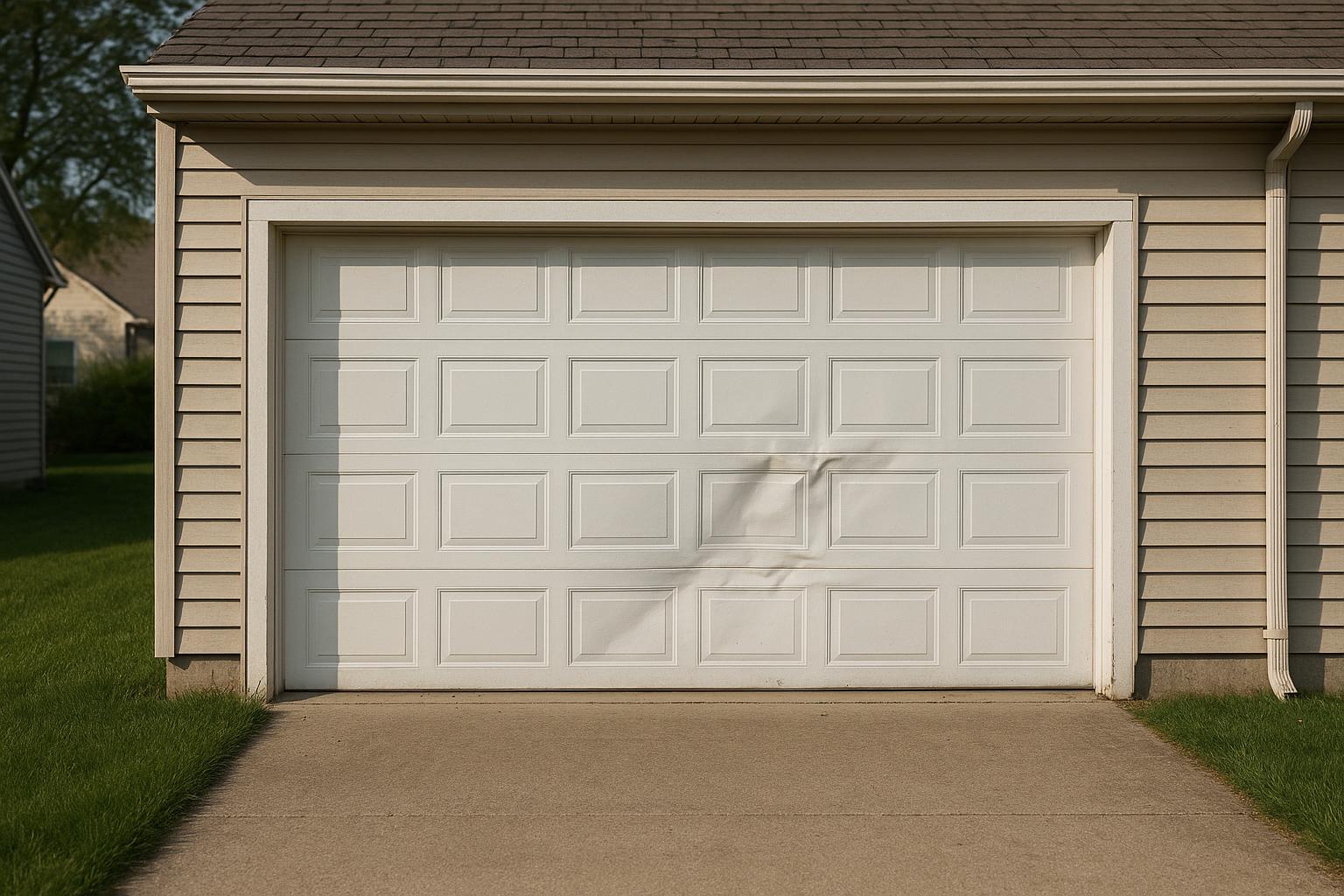
That Dented Panel Is Staring at You — Now What?
Maybe you backed into the garage door in a rush. Maybe a stray basketball finally did its damage. Or maybe a Michigan windstorm sent something flying into your door. Whatever the cause, you're now looking at a cracked, dented, or bent garage door panel and wondering: do I really need to replace the entire door, or can I just fix this one section?
It's one of the most common questions we hear from homeowners in Holland, and the answer isn't always straightforward. The right choice depends on the extent of the damage, the age of your door, and whether replacement panels are still available for your model. Let's walk through everything you need to consider so you can make a confident decision.
How Garage Door Panels Work
Most residential garage doors are made up of four or five horizontal panels, also called sections, that are connected by hinges. These panels work together as a unit — they roll along the tracks, bend around the curve of the rail, and form a tight seal when the door is closed.
Because each panel is a separate piece, it's technically possible to replace just one damaged section without swapping out the entire door. But "technically possible" and "best decision" aren't always the same thing.
When Replacing a Single Panel Makes Sense
A single-panel replacement is often the most cost-effective solution when the following conditions are met:
- The damage is limited to one panel. If only one section has a dent, crack, or bend, and the rest of the door is in good shape, a panel swap can save you hundreds of dollars compared to a full replacement.
- Your door is relatively new. If your garage door is less than 10 years old, replacement panels are more likely to be available from the manufacturer. The color, style, and insulation will match the rest of the door seamlessly.
- The tracks and hardware are undamaged. A hard impact can bend more than just the panel. If the tracks, rollers, hinges, and springs are all still in good working order, replacing the panel alone is a viable fix.
- The panel is still being manufactured. This is the biggest factor. Garage door manufacturers regularly discontinue panel styles and colors. If your exact panel is still available, you're in luck.
When a Full Door Replacement Is the Better Call
Sometimes a single-panel replacement sounds appealing but doesn't actually make financial or practical sense. Here are the situations where replacing the whole door is the smarter move:
- Multiple panels are damaged. If two or more sections are dented, warped, or cracked, the cost of replacing individual panels starts to approach the cost of a brand-new door — and a new door comes with a warranty and improved performance.
- Your door model has been discontinued. Manufacturers cycle through designs frequently. If your panel style is no longer available, you won't be able to find a match. A mismatched panel stands out and can hurt your home's curb appeal and resale value.
- The door is aging. If your garage door is 15 to 20 years old, investing in a single panel repair is like putting new tires on a car with a failing engine. The springs, cables, and other components are likely nearing the end of their lifespan too. A full replacement gives you a fresh start.
- You want to upgrade insulation or style. Many older garage doors in the Holland area lack proper insulation, which matters when January temperatures drop well below freezing. A new insulated door can lower your energy bills and make your garage significantly more comfortable during Michigan winters.
- The damage has affected the door's operation. If the damaged panel has caused the door to bind in the tracks, sit unevenly, or create gaps along the bottom seal, the structural integrity of the entire system may be compromised. Replacing just the panel might not solve the underlying problem.
What About Color Matching?
This is a detail that catches a lot of homeowners off guard. Even if your exact panel model is still available, paint colors fade over time due to sun exposure. A brand-new panel installed next to sections that have been weathering for years can look noticeably different — especially on south-facing garage doors that get direct sunlight.
In some cases, the color difference is subtle enough that it blends in within a few months. In others, it's immediately obvious. If curb appeal matters to you — and in neighborhoods across Holland and Zeeland, it usually does — this is worth factoring into your decision.
Cost Comparison: Panel vs. Full Replacement
While exact pricing depends on your door's size, material, and style, here are some general ranges to help you compare:
- Single panel replacement: Typically runs between $250 and $800, including parts and labor. Steel panels tend to be on the lower end, while custom wood or carriage-style panels cost more.
- Full garage door replacement: A standard single-car door installation usually falls between $1,000 and $2,500. Double-car doors and premium materials like wood or high-end insulated steel will be higher.
When you compare those numbers, you can see why replacing two or three individual panels often doesn't make sense financially. At that point, you're paying nearly as much as a new door without getting the benefits of updated hardware, fresh weatherstripping, and a manufacturer warranty.
How to Get Started
The best first step is to have a professional assess the damage in person. Photos can be helpful, but a technician needs to inspect the tracks, springs, and overall alignment to give you an accurate recommendation.
At Holland Garage Door Pro, we'll give you an honest assessment. If a panel replacement will solve the problem and save you money, that's what we'll recommend. If the smarter long-term investment is a new door, we'll explain why and walk you through your options — no pressure, no upselling.
Here's what to have ready when you call:
- The brand and model of your garage door, if you know it (check the label on the inside of the door or the original paperwork).
- A description or photo of the damage.
- The approximate age of the door.
This information helps us determine panel availability before we even arrive, which saves you time.
Don't Wait Too Long
One thing we see regularly with homeowners in the Holland area is putting off panel damage because the door still technically works. The problem is that a damaged panel puts extra stress on the opener, springs, and cables every time the door cycles. What starts as a cosmetic issue can turn into a mechanical failure if it's ignored long enough.
A cracked panel also compromises the seal of your garage, letting in cold air, moisture, and even pests. If your garage is attached to your home — as most are in our area — that affects your home's energy efficiency and comfort.
The Bottom Line
A single damaged garage door panel doesn't automatically mean you need a whole new door. But it doesn't always mean a quick fix, either. The right answer depends on the age of your door, the availability of matching panels, and the overall condition of the system.
If you're dealing with a damaged panel and aren't sure which direction to go, give Holland Garage Door Pro a call. We serve homeowners throughout Holland, Zeeland, Grand Haven, Saugatuck, Douglas, and Hamilton with straightforward advice and quality work. We'll help you make the choice that makes the most sense for your home and your budget.