
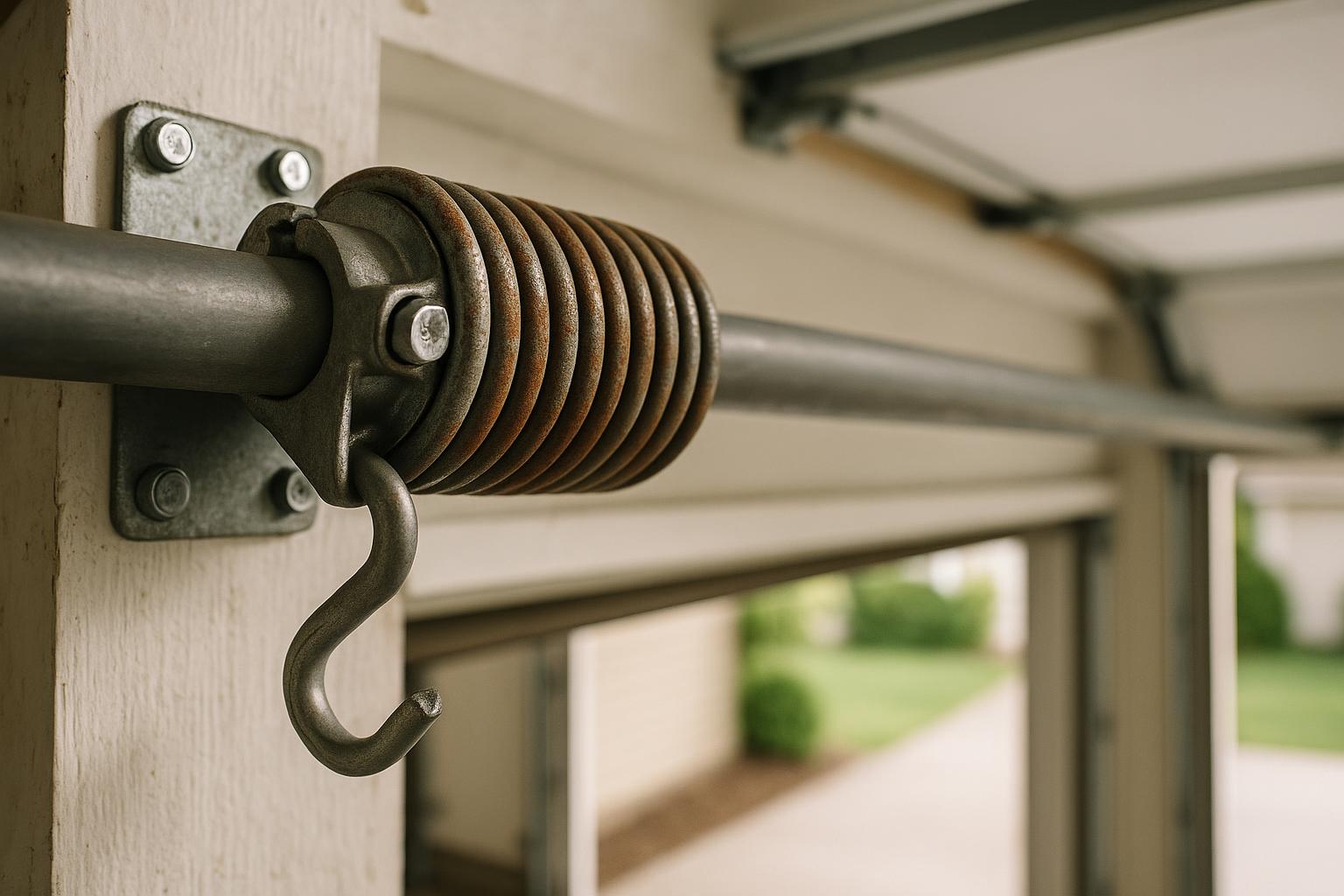
Your Garage Door Springs Are Working Harder Than You Think
Every time you open or close your garage door, a pair of tightly wound springs does the heavy lifting — literally. These springs counterbalance the full weight of your door, which can range from 130 pounds for a single-car door to over 400 pounds for an insulated two-car model. Without functioning springs, your garage door opener alone doesn't have the power to lift the door safely.
Most homeowners in Holland don't think about their garage door springs until something goes wrong. But springs have a finite lifespan, and when they fail, it usually happens suddenly — often with a loud bang that echoes through the house. The good news is that failing springs almost always give warning signs before they snap. Knowing what to look for can save you from an unexpected breakdown, a damaged door, or even a safety hazard.
How Long Do Garage Door Springs Last?
Standard torsion springs are rated for approximately 10,000 cycles. One cycle equals one full open-and-close sequence. If your household opens and closes the garage door four times a day, that's roughly 1,460 cycles per year — meaning your springs could wear out in about seven years.
Here in Holland, Michigan, our climate adds extra stress. Temperature swings between summer heat and harsh winter cold cause the metal in springs to expand and contract repeatedly, which accelerates fatigue. Road salt and moisture from Lake Michigan can also contribute to corrosion over time, further weakening the coils.
If your garage door springs are more than seven years old, it's worth paying close attention to how your door is performing.
7 Warning Signs Your Springs Are Failing
1. The Door Feels Heavier Than Usual
Try this simple test: disconnect your garage door opener by pulling the emergency release handle, then manually lift the door about halfway. A properly balanced door should stay in place on its own. If it feels unusually heavy, slides back down, or requires significant effort to lift, your springs are losing tension and may be close to breaking.
2. The Door Opens Unevenly or Crooked
If one side of your garage door rises faster than the other, it could indicate that one spring has weakened more than its counterpart. This uneven movement puts extra strain on your tracks, rollers, and opener, and it can cause the door to jam or come off its tracks entirely.
3. Visible Gaps in the Spring Coils
Take a look at the torsion spring mounted above your garage door (when the door is closed). A healthy spring has tightly wound, evenly spaced coils. If you notice a visible gap or separation in the coils, the spring has stretched beyond its functional limit and is on the verge of snapping.
4. Loud Squeaking or Grinding Noises
While some noise is normal, especially in older systems, a sudden increase in squeaking, popping, or grinding sounds during operation often points to spring fatigue. Worn springs struggle to move smoothly, creating friction and noise that weren't there before.
5. The Door Slams Shut Quickly
A garage door should close in a controlled, steady motion. If your door drops faster than normal or slams the last few inches to the ground, the springs are no longer providing adequate counterbalance. This is a serious safety concern, especially for households with children or pets.
6. The Opener Strains or Stops Mid-Cycle
Your garage door opener is designed to work with your springs, not to replace them. If the opener motor sounds like it's working harder than usual, hesitates, or stops partway through a cycle, weakened springs may be forcing it to bear too much of the door's weight. Continuing to operate the opener under these conditions can burn out the motor.
7. Rust or Corrosion on the Springs
Rust weakens the structural integrity of spring metal and increases friction as the coils wind and unwind. For homeowners in Holland and the surrounding lakeshore communities like Grand Haven and Saugatuck, proximity to Lake Michigan means higher humidity levels that can accelerate rust formation. If your springs show significant rust or pitting, their remaining lifespan is likely shorter than expected.
Why You Should Never Replace Garage Door Springs Yourself
We understand the DIY spirit — it's strong in West Michigan. But garage door spring replacement is one job that should always be left to a trained professional. Here's why:
- Extreme tension: Torsion springs are wound under tremendous force. A spring that releases unexpectedly can cause severe injury or even death.
- Specialized tools required: Proper spring replacement requires winding bars, clamps, and precise calibration tools that most homeowners don't have.
- Balancing matters: Springs must be calibrated to the exact weight and dimensions of your specific door. An improperly balanced door will wear out your opener prematurely and create ongoing problems.
- Warranty concerns: Many garage door and opener warranties are voided if repairs are performed by someone other than a qualified technician.
A professional can typically complete a spring replacement in under an hour, and the cost is far less than repairing the damage caused by a botched DIY attempt.
What to Do If a Spring Breaks
If you hear a loud bang from your garage and discover that your door won't open, a broken spring is the most likely culprit. Here's what to do:
- Don't try to operate the door. Using the opener with a broken spring can damage the opener, the door, or the tracks.
- Keep the area clear. A broken spring under tension can be dangerous. Keep children and pets away from the garage door.
- Call a professional. A qualified garage door technician can safely remove the broken spring, assess your door for any additional damage, and install a properly rated replacement.
If you're in Holland, Zeeland, Hamilton, or Douglas and experience a spring failure, we offer prompt service to get your door back up and running as quickly as possible.
Extend the Life of Your Springs
While springs will eventually wear out no matter what, a little preventive care can help you get the most out of them:
- Lubricate your springs with a silicone-based garage door lubricant two to three times per year. This reduces friction and helps prevent rust.
- Schedule annual maintenance. A professional tune-up includes inspecting springs, testing door balance, and catching small problems before they become big ones.
- Consider high-cycle springs. If you're replacing springs, ask about upgraded options rated for 25,000 or even 50,000 cycles. The upfront cost is slightly higher, but the extended lifespan makes them a smart investment.
Don't Wait for the Snap
A broken garage door spring is one of the most common — and most preventable — repair calls we get from homeowners across Holland and the surrounding lakeshore area. By learning to recognize the warning signs and scheduling timely maintenance, you can avoid the inconvenience of a door that won't open and the safety risks that come with a sudden spring failure.
If your garage door is showing any of the symptoms described above, don't wait until you're stuck. Contact Holland Garage Door Pro for a professional spring inspection. We'll assess the condition of your springs, let you know where they stand, and recommend the best course of action to keep your door operating safely and reliably.